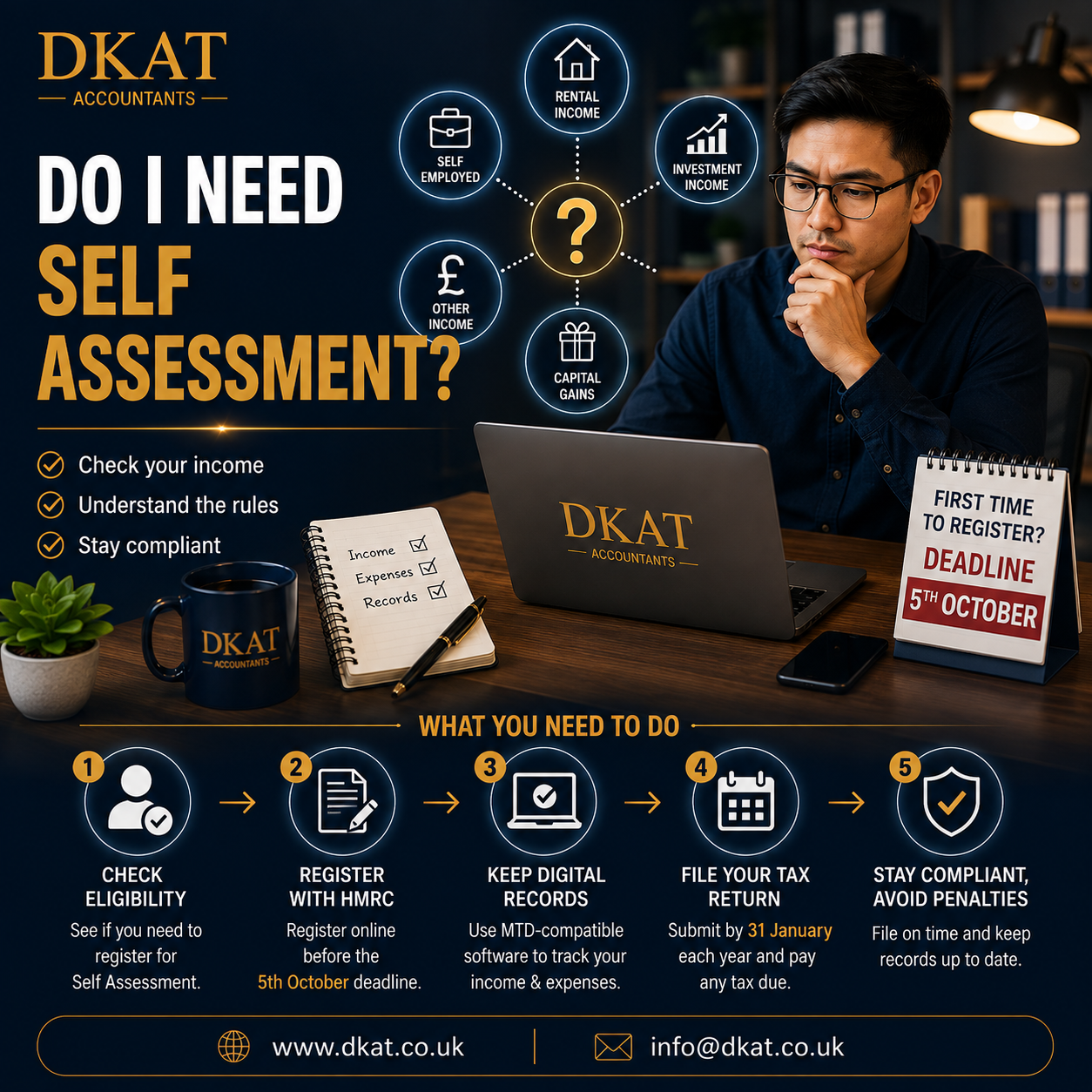
You need to file a Self Assessment tax return if, in the tax year, you: were self-employed with income over £1,000; received rental income over £2,500 net (or £10,000 gross); earned over £100,000 from any source; received dividend or savings income above your allowances; were a company director with untaxed income; claimed Child Benefit while you or your partner earned over £60,000; or had Capital Gains above the annual exempt amount. If none of these apply and all your income is taxed through PAYE, you almost certainly don't need to register. If you do need to register for the first time, the deadline is 5 October following the end of the tax year.
Every January, HMRC's Self Assessment helpline is flooded with the same question, asked in a mild panic: "do I actually need to do this?" The honest answer is that most PAYE employees don't — but a surprising number of people who assume they're exempt are, in fact, legally required to register. This checklist runs through every common trigger, in plain English, so you can check your own situation in a few minutes.
01 The quick checklist
Tick through these. If any single one applies to you for the tax year in question, you need to register for and file Self Assessment.
I was self-employed and earned over £1,000
Gross income from self-employment, freelancing, or a side hustle above the £1,000 trading allowance threshold.
I received rental income over £2,500 (net) or £10,000 (gross)
Income from letting out UK or overseas property, including a room in your home above the Rent a Room threshold.
My total income was over £100,000
Regardless of source — salary, bonus, dividends, or a combination — total income above £100,000 requires Self Assessment.
I received dividend or savings income above my tax-free allowances
Dividend income above the £500 dividend allowance, or savings interest above your Personal Savings Allowance.
I'm a company director with income not fully taxed through PAYE
Most directors need to register, even if salary alone is modest, if they also receive dividends or other untaxed income.
I (or my partner) claim Child Benefit and either of us earns over £60,000
Triggers the High Income Child Benefit Charge, which must be reported and paid via Self Assessment.
I made a capital gain above the annual exempt amount
Selling shares, a second property, or other chargeable assets with a gain above £3,000 in the tax year.
02 Self-employment and side income
If you're a sole trader, freelancer, or earn money from a side hustle — selling on Etsy, driving for a rideshare app, content creation, tutoring — and your gross income (before expenses) exceeds £1,000 in a tax year, you must register for Self Assessment. Below £1,000, the trading allowance means you can usually ignore it entirely; no registration, no reporting required.
Multiple small income streams count together. £600 from freelance design work plus £500 from reselling items online is £1,100 combined — over the threshold, even though neither individual activity looks large on its own.
03 Rental and property income
Landlords need to register if net rental income (after allowable expenses) exceeds £2,500, or if gross rental income (before expenses) exceeds £10,000, even if expenses bring the actual profit down close to zero. If you let out a room in your own home under the Rent a Room Scheme, the tax-free threshold is £7,500 — above that, registration is required.
04 High earners and dividend income
| Income type | Registration trigger |
|---|---|
| Total income, any source | Over £100,000 — always requires registration |
| Dividend income | Above the £500 tax-free dividend allowance (2025/26 and 2026/27) |
| Savings interest | Above your Personal Savings Allowance (£1,000 basic rate / £500 higher rate / £0 additional rate) |
The £100,000 threshold catches many PAYE employees by surprise — a strong bonus year, stock option vesting, or a one-off payment can push someone who's never filed a return before over the line without them realising it.
05 Company directors
Being a company director does not automatically require Self Assessment on its own — but in practice, most directors do need to register, because they typically receive income beyond simple PAYE salary: dividends, benefits in kind (company car, private medical insurance), or other untaxed income. If your only income as a director is a PAYE salary with nothing else, you may not need to register, but this is the exception rather than the rule.
06 The High Income Child Benefit Charge
If you or your partner claim Child Benefit and either of you has adjusted net income over £60,000 (raised from £50,000 in April 2024), the High Income Child Benefit Charge (HICBC) applies, clawing back some or all of the benefit. This charge must be calculated and paid through Self Assessment — even if you have no other reason to file a return.
This one catches people out constantly. Many higher-earning parents don't realise claiming Child Benefit creates a Self Assessment obligation, since the benefit itself is claimed through a completely separate process. The charge applies on a sliding scale between £60,000 and £80,000 of income, reaching 100% clawback at £80,000.
07 Capital Gains
If you sold shares, a second property, cryptocurrency, or other chargeable assets and your total gain for the year exceeds the £3,000 annual exempt amount, you need to report this via Self Assessment (property gains have a separate 60-day reporting requirement in addition to the annual return). Even if your gain is below the threshold, you may still need to report the disposal if proceeds exceed four times the exempt amount, even where no tax is ultimately due.
08 What if none of this applies to me?
- If your only income is a PAYE salary or pension, with no untaxed income, dividends, or capital gains — you almost certainly don't need to register
- HMRC's own online tool, "Check if you need to send a Self Assessment tax return," gives a definitive answer based on your specific circumstances in a few minutes
- If HMRC has previously told you that you don't need to file, that guidance generally stands unless your circumstances change
- If in doubt, it costs nothing to check — but assuming you're exempt without checking is the riskier choice
09 What happens if I should have registered and didn't?
The registration deadline for anyone filing for the first time is 5 October following the end of the relevant tax year. Missing it can trigger a failure to notify penalty under Finance Act 2007, Schedule 41, calculated as a percentage of any tax owed — even if you eventually file and pay everything correctly. The percentage depends on whether the failure was deliberate and whether you disclosed it yourself or HMRC caught it first, ranging from 0% (genuine reasonable excuse, prompt correction) up to 100% for deliberate, concealed non-disclosure.
If you realise you should have registered in a previous year, the right move is to come forward and register as soon as possible — voluntary, prompt disclosure consistently produces a far better penalty outcome than waiting for HMRC to identify the gap independently.
10 Frequently asked questions
If your freelance income (before expenses) is over £1,000 in the tax year, yes, you need to register for Self Assessment for that self-employment income, in addition to your PAYE employment which is already taxed correctly.
Occasional sales of your own personal possessions (clearing out a wardrobe, for example) are generally not trading income and don't trigger Self Assessment. Regular buying and reselling with a view to profit is treated differently and counts toward the £1,000 trading allowance threshold.
Yes. Whether you need to file is assessed separately for each tax year based on that year's circumstances. A year where you cross a threshold requires registration and filing for that year, even if the year before and after don't.
Check your HMRC online account or the HMRC app for your Self Assessment status and Unique Taxpayer Reference (UTR). If you have a UTR and are still required to file based on your current circumstances, HMRC will expect a return each year until you formally deregister.
Yes. If you stop being self-employed, stop receiving rental income, or your circumstances otherwise no longer meet any of the registration triggers, you can tell HMRC you no longer need to file, via your online account or by contacting HMRC directly.
Not sure if you need to file?
DKAT Accountants reviews your specific circumstances, confirms exactly what you need to do, and handles registration and filing on a fixed fee — no guesswork required.
Book a Free Consultation →