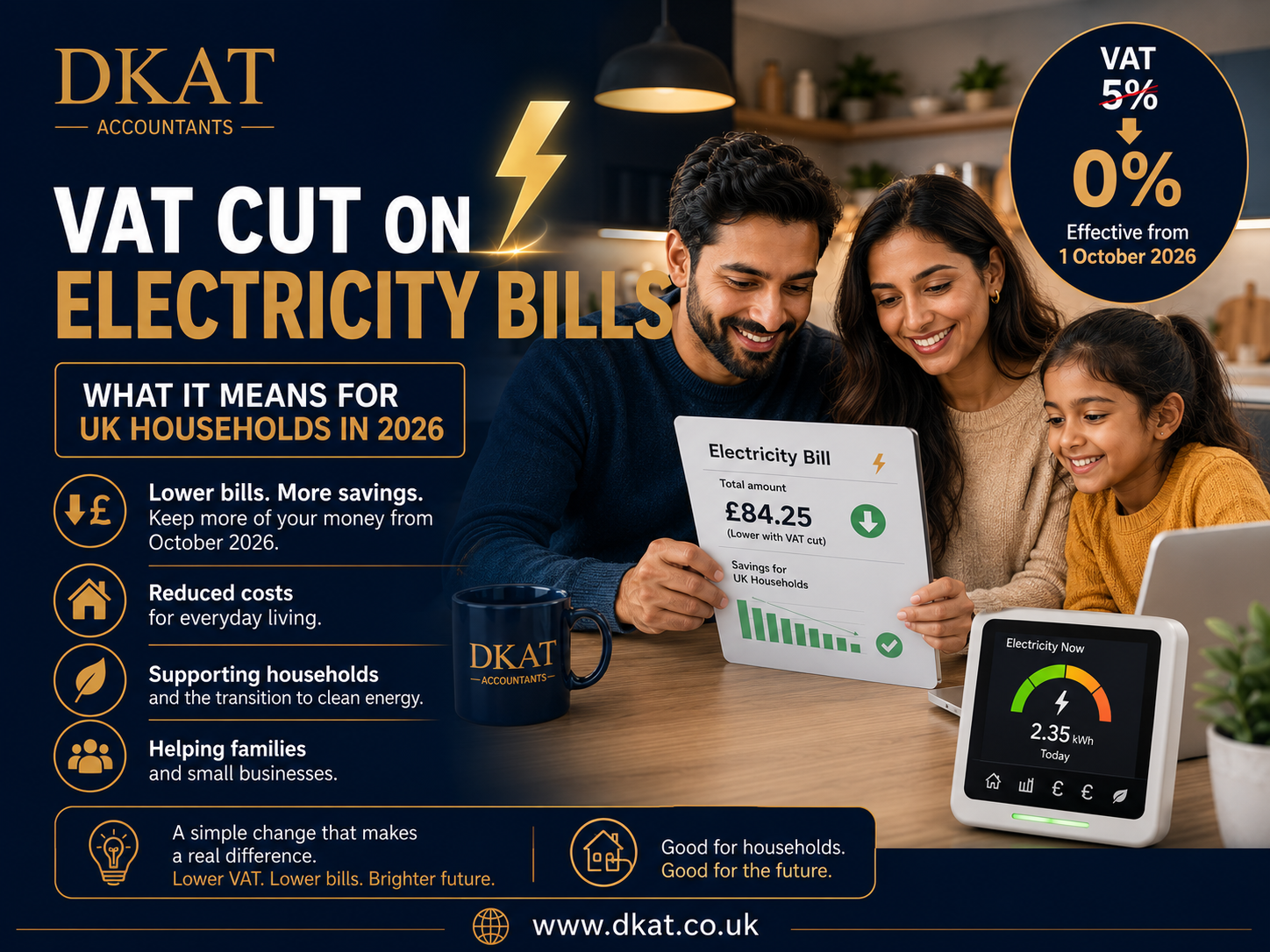
The UK government has announced that VAT on domestic electricity bills will be cut from 5% to 0% from 1 October 2026, saving the typical household around £45 a year. The move was confirmed by new Prime Minister Andy Burnham as one of his first acts in office, timed to soften the impact of an expected rise in Ofgem's autumn price cap. The cut applies to household electricity only — not gas, and not business energy bills, which remain unaffected. It will be funded by cancelling the government's £1.8 billion Digital ID programme, at an estimated cost to the Exchequer of around £850 million for 2026/27.
In one of his first acts as Prime Minister, Andy Burnham announced on 21 July 2026 that VAT on domestic electricity bills will be removed entirely from 1 October 2026, cutting the rate from 5% to 0%. The announcement, confirmed via an official GOV.UK statement from the Prime Minister's Office, HM Treasury and the Department for Energy Security and Net Zero, is being framed as immediate cost-of-living relief ahead of an expected autumn rise in the energy price cap.
01 What's actually changing
The headline numbers
Domestic electricity in the UK has been charged at a reduced VAT rate of 5% (rather than the standard 20%) since VAT was first extended to domestic fuel in 1994, under the fuel and power provisions of the VAT Act 1994. This announcement takes electricity a step further, to a zero rate — the same treatment currently given to most food, children's clothing, and books.
02 Why now — the political and economic context
Burnham entered Downing Street days before this announcement and moved quickly, framing the VAT cut as evidence of "immediate action" on living costs. The timing is deliberate: the change takes effect on 1 October, the exact date Ofgem's next price cap adjustment typically lands, meaning the VAT cut is designed to directly offset an expected increase in bills rather than simply reduce them from today's level.
New Chancellor John Healey said the move would offer households reassurance heading into winter. The government has also confirmed that the Northern Ireland Executive will receive comparable funding, so households across all of the UK see the benefit, even though VAT policy itself is reserved to Westminster.
03 How much will you actually save
The government's £45-a-year figure is based on Ofgem's typical household usage estimates. Your actual saving will depend on how much electricity you use, which supplier and tariff you're on, and whether you pay by direct debit, prepayment, or standard credit. Larger households with higher electricity consumption, or homes reliant on electric heating, will typically see a bigger cash saving than the average figure suggests.
This is not a huge sum on its own — roughly £3.75 a month for a typical household — but it is being deliberately timed to offset an anticipated price cap rise, so the more meaningful comparison is "bills rising by less than they otherwise would have" rather than "bills falling from today's level."
04 What this does NOT cover
| Bill type | Affected by this change? | Current VAT rate |
|---|---|---|
| Domestic electricity | Yes — cut to 0% from 1 Oct 2026 | 5% → 0% |
| Domestic gas | No change announced | Remains at 5% |
| Business/commercial electricity | No — domestic bills only | Remains standard-rated at 20% (subject to existing small-business reduced-rate rules) |
| Standing charges, network costs, green levies | Unaffected — this is a VAT change, not a cap on underlying costs | N/A |
It's worth being precise here: multiple government and press sources describe this specifically as a cut to domestic electricity VAT. Gas bills, and electricity used by businesses, are not covered by this announcement as things stand. If your household has a dual fuel bill (gas and electricity combined), only the electricity portion of that bill should see the VAT reduction.
05 How it's being funded
The government says the £850 million cost for 2026/27 will be funded by cancelling the national Digital ID programme, a scheme that was projected to cost around £1.8 billion over three years and had been criticised by a cross-party parliamentary committee over privacy concerns, implementation delays, and questions about its effectiveness. The government has indicated that updated costings for future years will be set out at the next Budget, meaning the long-term funding position beyond this financial year is not yet fully confirmed.
06 What businesses need to know
- This VAT cut applies to domestic/residential electricity supplies only — standard commercial electricity contracts remain standard-rated at 20% and are unaffected
- Small businesses using minimal amounts of energy may already qualify for the existing reduced domestic rate under HMRC's de minimis rules; this specific announcement does not change those separate provisions
- Landlords who include electricity within all-inclusive rent (common in some HMO arrangements) should check with their accountant how the change interacts with their existing VAT treatment
- Businesses should not assume this cut applies to their own energy bills without checking their supply category directly with their supplier
07 What to check on your own bill
Suppliers have been told by government that the VAT reduction should be passed on to all household customers, including those on fixed tariffs agreed before the announcement — consistent with how previous VAT changes to energy bills were handled. From 1 October, check your electricity bill or statement to confirm the VAT line has moved from 5% to 0%. If it hasn't been applied by your next bill after that date, it's worth querying directly with your supplier.
08 Is this legally confirmed yet?
Important distinction: This is a government policy announcement, not yet enacted legislation. VAT rate changes of this kind are typically implemented through a Treasury Order under the VAT Act 1994, or confirmed through the next Finance Bill. While the government's stated intention and start date are clear and have been published on GOV.UK, the formal legislative mechanism giving it legal effect would normally follow. We will update this article once the formal statutory instrument or Finance Bill provision is published.
09 Frequently asked questions
No. Based on the government's own announcement, this change applies specifically to domestic electricity bills. Gas remains at the existing 5% reduced VAT rate, with no change announced as part of this policy.
The government has stated that suppliers should pass the VAT reduction on to all household customers, including those on fixed tariffs, in line with how previous energy VAT changes were applied. If you're on a fixed deal, check your bill from October onward to confirm this has happened.
No, not directly. This announcement covers domestic (household) electricity supplies. Standard business electricity contracts remain subject to the usual 20% standard VAT rate, separate from any existing small-business reduced-rate provisions that may already apply to minimal energy users.
£45 a year is the government's estimate of 5% VAT on a typical household's annual electricity spend under Ofgem's average usage figures. Households using significantly more electricity than average, particularly those with electric heating, would see a larger cash saving.
The government has published a clear commitment on GOV.UK with a specific start date and funding source. As with any tax policy announcement, formal implementation depends on the relevant legislative process being completed, and details could be refined at the next Budget, but no indication of reversal has been given.
Wondering how this affects your business or household budget?
DKAT Accountants keeps clients updated on exactly how policy changes like this affect their specific circumstances — from VAT treatment on mixed-use properties to energy cost planning for businesses. Get in touch for a free consultation.
Book a Free Consultation →